






Table of Contents
Introduction
Cannabis has been a part of Indian culture for centuries, woven into ancient rituals, Ayurvedic medicine, and even mythology. Yet, modern India faces a complex relationship with cannabis, especially as global interest in its compounds, CBD (cannabidiol) and THC (tetrahydrocannabinol), grows. Understanding the differences between CBD and THC is crucial for anyone navigating India’s evolving wellness landscape, legal frameworks, and health trends.
This blog explores what sets CBD and THC apart, their effects, benefits, risks, and why these differences are particularly important in the Indian context.
What’s the Difference Between CBD and THC?
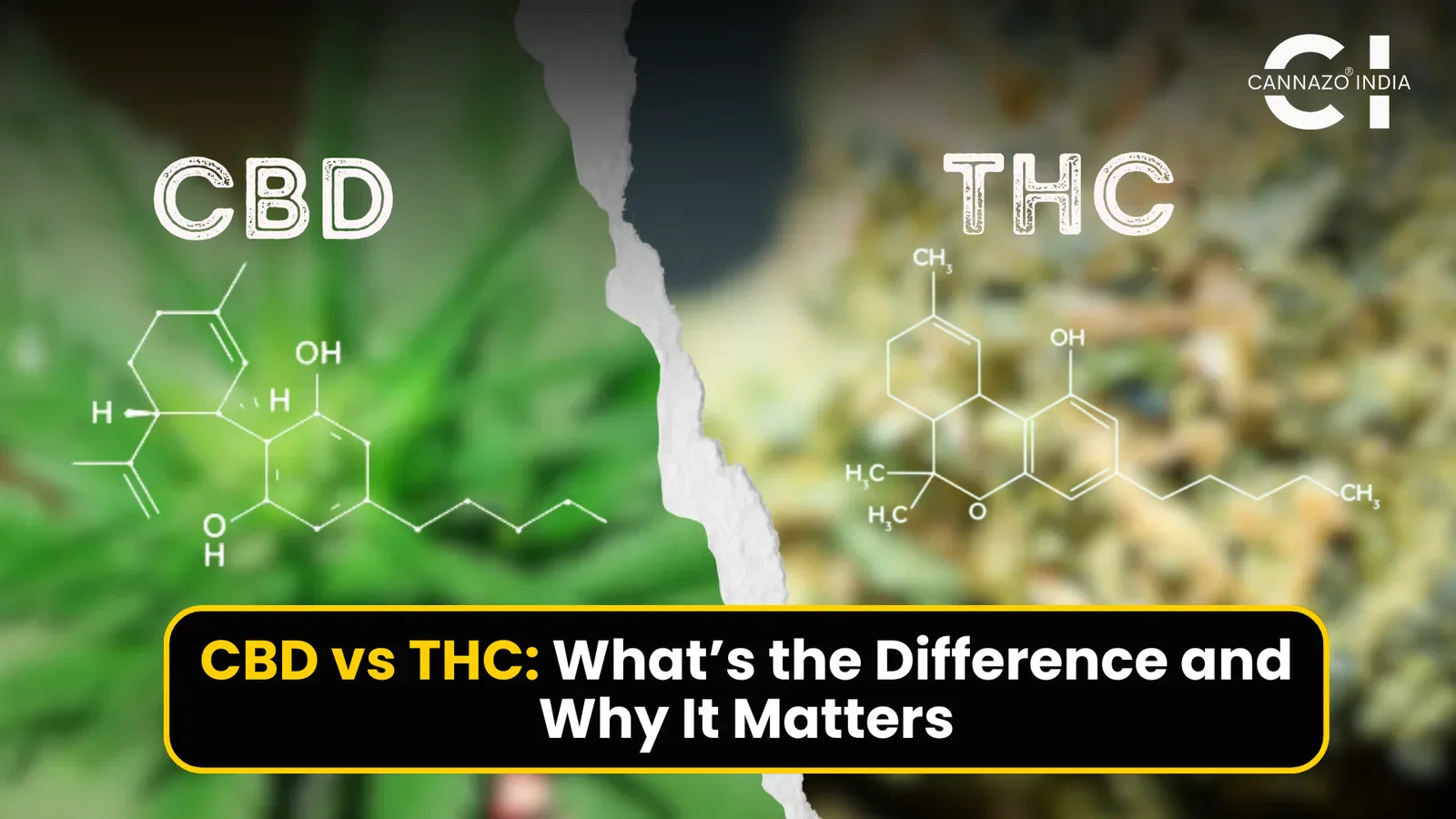
Both CBD and THC are cannabinoids—naturally occurring compounds found in the cannabis plant. While they share a similar chemical structure, their effects on the human body are distinctly different.
CBD (Cannabidiol)
- Non-psychoactive: Does not produce a “high.”
- Sources: Primarily extracted from hemp, a variety of cannabis with low THC content.
- Uses: Associated with relaxation, pain relief, anti-inflammatory effects, and potential therapeutic benefits for anxiety, epilepsy, and more.
- Legal status in India: Permitted if derived from hemp and contains less than 0.3% THC, usually for medicinal purposes and with a prescription.[1],[2],[3]
THC (Tetrahydrocannabinol)
- Psychoactive: Responsible for the “high” associated with marijuana use.
- Sources: Found in higher concentrations in marijuana (another variety of cannabis).
- Uses: Used for pain management, nausea reduction, and appetite stimulation, but also linked to intoxication and potential for abuse.
- Legal status in India: Generally illegal unless prescribed for specific medical conditions, and only under strict regulation.[1],[2],[3]
Chemical Structure and How They Work
CBD and THC both contain 21 carbon atoms, 30 hydrogen atoms, and 2 oxygen atoms. The difference lies in how these atoms are arranged, which changes how they interact with the body’s endocannabinoid system (ECS).
- THC binds directly to CB1 receptors in the brain, triggering psychoactive effects.
- CBD does not bind directly to these receptors. Instead, it modulates the ECS, supporting the body’s own endocannabinoids and regulating processes like pain, mood, and inflammation.[1]
CBD vs THC Comparison Table
| Aspect | CBD | THC |
| Psychoactive effect | No | Yes |
| Legal status (India) | Legal if <0.3% THC, with restrictions | Illegal except for specific medical use |
| Medical uses | Anxiety, epilepsy, inflammation, pain | Pain, nausea, appetite, some medical uses |
| Side effects | Mild: fatigue, dry mouth, diarrhoea | Euphoria, altered perception, anxiety, paranoia |
| Drug test detection | Possible | Yes |
CBD vs THC: Which One Is Right for You?
Understanding CBD and THC
CBD (Cannabidiol) and THC (Tetrahydrocannabinol) are the two most prominent cannabinoids found in the cannabis plant. While they share a similar chemical structure, their effects and uses differ significantly:
- CBD is non-psychoactive, meaning it does not produce a “high.” It is valued for its calming, anti-inflammatory, and potential therapeutic properties.
- THC is psychoactive and responsible for the “high” associated with marijuana. It is often used for pain relief, appetite stimulation, and certain medical conditions.[1]
How CBD and THC Work Together
When CBD and THC are consumed together, they interact with the body’s endocannabinoid system in complex ways. This synergy is known as the entourage effect, where the combined use of cannabinoids and other plant compounds (like terpenes) may enhance their overall therapeutic benefits compared to using them in isolation.
- CBD may reduce some of THC’s adverse effects, such as anxiety or paranoia, but recent research also suggests that CBD can sometimes increase the intensity and duration of THC’s effects by inhibiting its metabolism, especially when taken orally.
- Many users find that products containing both CBD and THC provide more comprehensive relief for pain, anxiety, and sleep issues.[4]
Why Understanding CBD vs THC Matters
- Legal Implications: Knowing the difference is crucial to avoid legal trouble, as laws for CBD and THC differ significantly by country and even by state within countries.
- Medical Decisions: The choice between CBD and THC can impact treatment outcomes for conditions like chronic pain, anxiety, and sleep disorders.
- Personal Preferences: Some people want the therapeutic benefits of cannabis without intoxication (CBD), while others may need the stronger effects of THC for certain conditions.[5]
How CBD and THC Are Used in Products
CBD and THC are available in a variety of forms:
- CBD Products: Oils, tinctures, capsules, gummies, topicals, and beverages. Most are derived from hemp and contain less than 0.3% THC.
- THC Products: Edibles, tinctures, vape cartridges, oils, and dried flower. These are usually sourced from marijuana and have higher THC content.
- Full-Spectrum Products: Contain both CBD and THC (within legal limits), along with other cannabinoids and terpenes, to maximize the entourage effect.
- Broad-Spectrum Products: Contain multiple cannabinoids but are typically THC-free.
- Isolates: Pure CBD or THC, with all other compounds removed.[5],[6]
CBD vs THC for Medical Use
| Condition | CBD | THC |
| Pain | Chronic pain, inflammation, arthritis | Neuropathic pain, cancer pain, severe pain |
| Sleep | Improves sleep quality, reduces anxiety | Induces sleep, helps with insomnia, but may reduce REM sleep |
| Anxiety | Reduces anxiety, non-intoxicating | May reduce anxiety at low doses, but can cause anxiety at high doses |
| Epilepsy | FDA-approved for certain forms (e.g., Dravet syndrome) | Not typically used |
| Appetite | No significant effect | Increases appetite (“the munchies”) |
| Nausea | Limited evidence | Effective for chemotherapy-induced nausea |
CBD vs THC: Best for Pain, Sleep, Anxiety, and More
- Pain: THC is often more effective for severe or neuropathic pain, while CBD is preferred for chronic inflammation and mild pain. Many find a combination works best.
- Sleep: THC can help induce sleep but may disrupt sleep cycles with long-term use. CBD helps improve sleep quality by reducing anxiety and pain, with fewer side effects.
- Anxiety: CBD is generally preferred due to its calming effects without intoxication. THC may worsen anxiety in some individuals, especially at higher doses.
- Other Conditions: CBD is widely used for epilepsy and inflammatory conditions; THC is more effective for appetite stimulation and nausea. [7]
Legal Status of CBD and THC in India
India’s legal framework distinguishes between hemp-derived CBD and high-THC cannabis products:
- CBD (hemp-derived, <0.3% THC): Legal for medicinal use, but only with a prescription and from licensed sources. Products must comply with the NDPS Act and Drugs and Cosmetics Act. Full-spectrum CBD is allowed if it meets these criteria.
- THC: Remains illegal for recreational use. Medical use is possible only with a prescription and strict regulation, and is rare.
The Ministry of AYUSH has recognised the potential of CBD in Ayurvedic medicine, leading to a growing market for CBD wellness products, though these are tightly regulated and not widely available over the counter.
The Future of CBD and THC in India
India’s cannabis laws are evolving, and there is growing momentum for reform, especially as research uncovers more about the therapeutic benefits of cannabinoids. The government is cautiously opening the door to hemp cultivation and regulated CBD products, while maintaining strict controls over THC.
Key trends to watch:
- Expansion of hemp farming: Sustainable and eco-friendly, hemp is being promoted for both industrial and medicinal purposes.
- Growth of the CBD wellness market: Urban consumers are driving demand for high-quality, lab-tested CBD products.
- Research and clinical trials: More Indian institutions are studying the safety and efficacy of cannabinoids for various health conditions.
- Policy reforms: Ongoing debates may lead to clearer regulations and broader access to medical cannabis in the future.[8]
Conclusion
CBD and THC, though both derived from the cannabis plant, offer vastly different experiences and benefits. In India, where legal and cultural contexts are unique, understanding these differences is crucial for anyone considering cannabis-derived products.
- CBD is non-intoxicating, legal under certain conditions, and offers a range of wellness benefits.
-
THC is a psychoactive compound that offers unique therapeutic benefits when used under medical supervision. In India, its use is strictly regulated and permitted only for specific medical conditions where it has been shown to provide significant relief.
As India’s attitudes and laws continue to shift, staying informed about the science, legality, and safe use of CBD and THC will empower individuals to make better choices for their health and well-being.
FAQs
-
Will CBD show up on a drug test?
CBD itself is not screened for in standard drug tests. However, many CBD products contain trace amounts of THC. Frequent or high-dose use of full-spectrum CBD products may result in a positive drug test for THC, especially if the product is mislabeled or contaminated. To avoid this, opt for broad-spectrum or isolate CBD products that are third-party tested.
-
Can you take CBD and THC together?
Yes, many people use CBD and THC together to maximize therapeutic benefits via the entourage effect. However, combining them can intensify both positive and negative effects, and may increase the risk of THC showing up on a drug test. Always start with low doses and consult a healthcare provider, especially if you have underlying health conditions or are taking other medications.
References
- Understanding cannabis and cannabinoids (THC and CBD). (n.d.). American Cancer Society. https://www.cancer.org/cancer/managing-cancer/treatment-types/complementary-and-integrative-medicine/marijuana-and-cancer/understanding-cannabis.html
- Fletcher, J. (2023, October 19). A comparison of CBD and THC. https://www.medicalnewstoday.com/articles/325871
- Is CBD legal in India? – Update 2024 – Hemppedia. (n.d.). https://www.hemppedia.org/is-cbd-legal-in-india/
- Chander, R. (2024, January 24). What is the interaction between CBD and THC? Healthline. https://www.healthline.com/health/the-entourage-effect
- Is CBD legal in India? – Update 2024 – Hemppedia. (n.d.-b). https://www.hemppedia.org/is-cbd-legal-in-india/
- Gandhi, R. (2025c, May 2). CBD oil is legal in India — but under these conditions. Hempbuti. https://www.hempbuti.in/blogs/news/cbd-oil-is-legal-in-india
- Mazza, S. (2024, June 24). CBD vs. THC: Exploring the Differences and Potential Benefits. Cannabis Science Tech. https://www.cannabissciencetech.com/view/cbd-vs-thc-exploring-the-differences-and-potential-benefits
- Hempstrol. (2025, April 30). The amazing facts about cannabidiol oil in India. Hempstrol. https://www.hempstrol.com/cbd-blog-india/the-amazing-facts-about-cannabidiol-oil-in-india


Comments
The opinions expressed here are the views of the writer and do not necessarily reflect the views and opinions of Cannazo India.