












Table of Contents
A cancer diagnosis often brings treatment-related challenges such as nausea, poor appetite, sleep disturbance, anxiety, fatigue, and pain. As interest in plant-based wellness grows, many patients and families ask whether cannabis, CBD, or products such as Rick Simpson Oil (RSO) can help.
Cannabis-based products may have a role as adjunctive supportive care, used alongside. However, because cannabis products can interact with medicines and affect alertness, blood pressure, mood, and liver enzymes, oncologists and pharmacists should be involved before use.
What CBD and cannabis can do
Cannabis contains many compounds called cannabinoids. The two most discussed are:
- CBD (cannabidiol): Non-intoxicating and often associated with calmness, sleep support, and potential anti-inflammatory effects.
- THC (delta-9-tetrahydrocannabinol): Intoxicating; it may influence appetite, nausea, pain perception, and sleep.
Supportive uses:
- Nausea and vomiting related to chemotherapy
- Appetite and weight-related concerns
- Cancer-related pain, particularly when combined with conventional pain management
- Anxiety, sleep disruption, and overall symptom burden
- Quality-of-life support during palliative care
A 2025 systematic review found that cannabinoids may help with cancer-associated pain and anxiety, and may also support appetite, chemotherapy-induced nausea and vomiting, and insomnia; it also found that balanced THC:CBD products appeared more helpful for sleep and appetite, while CBD-predominant products were more associated with anxiety benefit.
What they cannot do
Laboratory and animal studies sometimes show that cannabinoids can affect cancer-cell pathways. Concentration, purity, dose, product formulation, and individual biology all matter enormously.
It is also important not to delay or modify prescribed cancer treatment because of online claims. If a product is being considered, it should be discussed with the treating oncologist, palliative-care team, and pharmacist.
Managing chemotherapy side effects
Chemotherapy-induced nausea and vomiting (CINV) is one of the better-studied areas for cannabinoids. The American Society of Clinical Oncology guideline supports a recommendation for oral THC:CBD cannabis extract in adults who continue to experience CINV during moderate or highly emetogenic intravenous chemotherapy despite standard anti-nausea treatment.
This does not mean cannabis should be the first choice for every patient. Standard antiemetic medicines remain the foundation of CINV management. Cannabinoids may be considered as an add-on in selected cases, especially when nausea persists despite guideline-based therapy.
| Symptom | What current evidence suggests |
| Chemotherapy nausea and vomiting | THC-containing or THC:CBD products may help some patients as an add-on to standard antiemetics; CBD alone has not shown the same benefit. |
| Appetite loss | Some THC-related products may improve appetite, but evidence is mixed and weight gain is not guaranteed. |
| Pain | Cannabinoids may help some cancer-related pain, but they should complement, not replace, oncology pain care. |
| Anxiety and sleep | Early evidence suggests possible benefit, but product type, THC content, dose, and individual response vary. |
| Cancer itself | No clinical evidence supports cannabis or CBD as a cure or standalone cancer treatment. |
What is RSO?
Rick Simpson Oil (RSO) is a highly concentrated, full-spectrum cannabis extract, usually rich in THC. It is named after Rick Simpson, a Canadian advocate who popularized its use. RSO is typically taken in very small oral amounts and is much more potent than many CBD oils.
Because RSO can contain substantial THC, it may cause intoxication, dizziness, impaired coordination, anxiety, paranoia, rapid heartbeat, low blood pressure, and sleepiness. Homemade or poorly standardised products can also vary widely in potency and may carry contamination risks.
RSO may be a cannabis extract used for symptom support under professional guidance.
Current state of research
Research is moving in a positive direction, but it remains early and uneven. A major limitation is that many studies use different products, doses, THC:CBD ratios, cancer types, and outcome measures, making results difficult to compare.
The most consistent clinical signal is for THC-containing medicines and THC:CBD combinations in refractory chemotherapy-related nausea and vomiting. By contrast, a randomised trial of oral CBD oil in people receiving palliative care found no difference in overall cancer-symptom relief compared with placebo.
Research in India
India is increasingly contributing to medicinal-cannabis research. A clinical study from Gujarat Ayurved University examined water-wash-processed cannabis leaf powder in 24 people with cancer and reduced quality of life. Participants received 250 mg three times daily for four weeks; researchers reported improvements in pain, anxiety, depression, appetite, nausea, insomnia, and overall quality of life, with no major adverse effects or withdrawal symptoms reported during the trial.
This is encouraging, but it was a small, open-label study, not a large randomised controlled trial. It supports the need for further well-designed Indian research rather than proving that cannabis cures cancer.
India’s CSIR-Indian Institute of Integrative Medicine (CSIR-IIIM) in Jammu is also developing cannabis-based medicinal research, with work focused on conditions including cancer pain, neuropathies, and epilepsy. Public reporting indicates collaboration involving CSIR, ICMR, and the Department of Biotechnology, with plans moving toward pre-clinical studies and regulated manufacturing.
Tata Memorial Centre has also been associated with an approved clinical study investigating vaporised cannabinoids in breast cancer, reflecting growing institutional interest in carefully controlled research.
Safety, interactions, and supervision
Cannabis and CBD are not automatically harmless simply because they are plant-derived. Potential effects include drowsiness, dizziness, dry mouth, fast heartbeat, low blood pressure, mood changes, impaired coordination, and, particularly with THC, anxiety, paranoia, or hallucinations in susceptible people.
CBD may affect liver enzymes in the cytochrome P450 family, which are involved in metabolising many medicines. Highly concentrated CBD oils could theoretically increase toxicity or reduce the effectiveness of some cancer therapies, although direct interaction studies with chemotherapy remain limited.
Before using any cannabis or CBD product during cancer care, speak with the oncology team about:
- All chemotherapy, targeted therapy, hormone therapy, immunotherapy, pain medicines, and anti-nausea medicines
- Blood thinners, sedatives, seizure medicines, and liver or kidney conditions
- Pregnancy, breastfeeding, history of substance use, psychosis, or significant heart disease
- The exact product label: CBD mg, THC mg, full-spectrum versus isolate, batch testing, and serving size
- Whether smoking or vaping is appropriate; inhalation may be unsuitable for some patients, especially those with lung disease or immunosuppression
Cannazo Cancer Care range
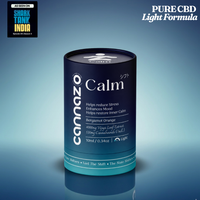
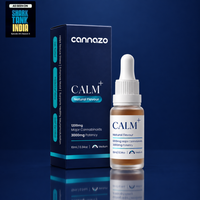
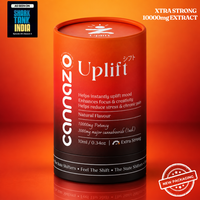
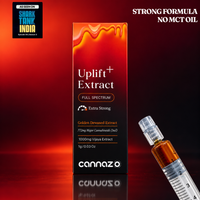
Cannazo India’s Cancer Care category and products including CBD-rich oils, full-spectrum extracts, and Cannaronil RSO. Its CBD oils are licensed under the Ministry of AYUSH, third-party lab tested, and formulated with medical-team guidance; it also describes a GMP-certified manufacturing unit in Madhya Pradesh.
A practical checklist before purchase or use:
- Confirm third-party lab results and batch-specific cannabinoid content.
- Check whether the product contains THC and how much per serving.
- Ask the oncology pharmacist to screen it against the current medication list.
- Avoid substituting it for prescribed antiemetics, analgesics, or anticancer therapy.
- Keep a symptom and side-effect diary to review with the care team.
Strong medical disclaimer
This article is for educational purposes only and is not medical advice, diagnosis, or treatment. Do not start, stop, or change cancer treatment, chemotherapy, pain medicines, anti-nausea medicines, or any prescription medication without guidance from a qualified oncologist, palliative-care clinician, or pharmacist. If you experience severe dizziness, fainting, chest symptoms, confusion, severe anxiety, allergic reactions, or worsening cancer symptoms, seek urgent medical care.
Conclusion
Cannabis and CBD may have a meaningful role in supportive cancer care, particularly for selected patients dealing with persistent chemotherapy-related nausea, appetite changes, sleep disruption, anxiety, or pain. The evidence is most encouraging for carefully standardised THC-containing or THC:CBD approaches used alongside conventional anti-nausea therapy.
The positive path forward is responsible integration: high-quality products, transparent labelling, clinician supervision, and continued research. India’s emerging cannabis-medicine research, including work at CSIR-IIIM and clinical studies involving cancer patients, is a promising sign that safer, evidence-based options may become better defined in the years ahead.
FAQ
-
Can cannabis or CBD cure cancer?
No. There is no reliable clinical evidence that cannabis, CBD, or RSO cures cancer or replaces standard oncology treatment. -
How can CBD help cancer patients?
CBD may offer supportive benefits for some people, such as relaxation or sleep support, but clinical evidence for CBD alone improving core cancer symptoms is limited. One randomised palliative-care trial found no overall symptom-relief advantage over placebo. -
What is RSO (Rick Simpson Oil)?
RSO is a highly concentrated, often THC-rich cannabis extract. It is sometimes promoted as a cancer cure, but no high-quality human trials support that claim; it may cause significant intoxicating and interaction-related risks. -
Is it safe to use CBD alongside chemotherapy?
It may be safe for some people, but it requires individual medical review. CBD can affect drug-metabolising liver enzymes and may interact with cancer treatments or other medicines, so an oncologist and pharmacist should approve it first. -
Do I need a doctor’s supervision for cancer-care products?
Yes. Anyone considering cannabis, CBD, or RSO during cancer treatment should involve their oncology team, especially if they are on chemotherapy, immunotherapy, blood thinners, sedatives, or multiple medications.
References
- American Cancer Society. (n.d.). Understanding cannabis and cannabinoids. https://www.cancer.org/content/dam/CRC/PDF/Public/8247.00.pdfcancer
- American Society of Clinical Oncology. (2024). Cannabis and cannabinoids in adults with cancer: ASCO guideline. Journal of Clinical Oncology. https://ascopubs.org/doi/10.1200/JCO.23.02596ascopubs
- Central Drugs Standard Control Organisation. (2019). Permission for conducting clinical study: Clinical effect of vaporized cannabinoids on breast cancer genetic expression patterns in the peri-operative period (CABREX Study). https://www.cdsco.gov.in/opencms/resources/UploadCDSCOWeb/2018/UploadCTApprovals/DrRajendra%20Achyut.pdfcdsco.gov
- Indian Council of Medical Research. (n.d.). ICMR health news: Cannabis research for cancer pain and epilepsy. https://www.icmr.gov.in/icmrobject/custom_data/1702967923_health_news1.pdficmr.gov
- King Edward Memorial Hospital Research Centre. (2023). Clinical studies with cannabis in India: A need. https://www.kem.edu/wp-content/uploads/2023/07/Clinical_studies_with_Cannabis_in_India___A_need.7.pdfkem
- Multinational Association of Supportive Care in Cancer. (2022). Cannabinoids for gastrointestinal symptoms in cancer: MASCC guideline review. PubMed. https://pubmed.ncbi.nlm.nih.gov/36525085/pubmed.ncbi.nlm.nih
- National Cancer Institute. (2025). Cannabis and cannabinoids (PDQ®)—Health professional version. https://www.cancer.gov/about-cancer/treatment/cam/hp/cannabis-pdqcancer
- National Cancer Institute. (n.d.). Cannabis and cannabinoids (PDQ®)—Patient version. https://www.cancer.gov/about-cancer/treatment/cam/patient/cannabis-pdqcancer
- Press Information Bureau, Government of India. (2025). Dr Jitendra Singh reviews progress of India’s first-of-its-kind cannabis medicinal research project at CSIR-IIIM, Jammu. https://pib.gov.in/PressReleasePage.aspx?PRID=2334398pib.gov
- Press Information Bureau, Government of India. (2026). Jammu to pioneer India’s first cannabis medicine project. https://www.pib.gov.in/PressReleseDetailm.aspx?PRID=1941898pib.gov
- Tavhare, S. D., Acharya, R. R., et al. (2019). Management of chronic pain with Jalaprakshalana (water-wash) Shodhita Bhanga (Cannabis sativa L.) in cancer patients with deprived quality of life: An open-label single-arm clinical trial. Ayu. https://pmc.ncbi.nlm.nih.gov/articles/PMC6891996/pmc.ncbi.nlm.nih


Comments
The opinions expressed here are the views of the writer and do not necessarily reflect the views and opinions of Cannazo India.