










Table of Contents
If you've been trying to lose fat but the scale won't budge, you're not alone. According to the National Family Health Survey (NFHS-5), over 24% of Indian adults are now overweight or obese up from 21% in the previous survey.
Fat loss in 2026 requires fixing your nutrition, movement, hormones, and sleep at the same time. This guide breaks down exactly how to do that no crash diets.
What Is Fat Loss? (And Why It's Different From Weight Loss)
Fat loss is the targeted reduction of stored body fat (adipose tissue) while preserving muscle mass. It differs from general weight loss, which can include water, muscle, and fat.
Your body stores fat in two main forms:
- Subcutaneous fat:- under the skin (visible, less dangerous)
- Visceral fat:- around internal organs (linked to diabetes, heart disease, and metabolic syndrome)
Visceral fat is the more dangerous type. A 2020 study published in JAMA Network Open found that high visceral fat is independently associated with cardiovascular risk even in people with a "normal" BMI.
How to Lose Fat: 7 Proven Steps for 2026
Step 1: Create a Sustainable Calorie Deficit
Fat loss requires burning more calories than you consume. This is non-negotiable.
A deficit of 300–500 calories per day produces roughly 0.5–1 kg of fat loss per week the rate research consistently identifies as sustainable and safe (source: Obesity Reviews, 2021).
How to find your calorie needs:
- Calculate your TDEE (Total Daily Energy Expenditure) using an online calculator
- Subtract 300–500 calories from that number
- Track your intake for 2–3 weeks and adjust based on results
Step 2: Eat More Protein at Every Meal
Protein is the single most important macronutrient for fat loss. It:
- Reduces hunger (by increasing satiety hormones like GLP-1 and PYY)
- Preserves muscle mass during a calorie deficit
- Burns more calories during digestion (thermogenic effect: ~25–30% vs 6–8% for carbs)
High-protein Indian foods:
- Paneer (100g = 18g protein)
- Moong dal (100g cooked = 7g protein)
- Chicken breast (100g = 23g protein)
- Greek yogurt / hung curd (100g = 10g protein)
- Eggs (1 egg = 6g protein)
Aim to include a protein source at every meal, not just dinner.
Step 3: Prioritize Resistance Training
Cardio burns calories during a workout. Resistance training burns calories after through increased muscle mass, which raises your resting metabolic rate (RMR).
A meta-analysis in Medicine & Science in Sports & Exercise (2020) found that resistance training raises RMR by an average of 4–5% translating to 60–100 extra calories burned per day at rest.
You do not need a gym. Bodyweight training, resistance bands, and a pair of dumbbells are sufficient for most beginners.
Step 4: Optimize Sleep for Fat Loss
Most people overlook sleep. It may be the most underrated fat loss lever.
A study in Annals of Internal Medicine found that sleeping only 5.5 hours vs. 8.5 hours during a calorie deficit reduced fat loss by 55% and increased muscle loss by 60%. Same deficit. Dramatically different body composition results.
Step 5: Manage Stress and Cortisol
Chronic stress triggers cortisol release. Chronically elevated cortisol promotes abdominal fat accumulation, increases appetite, and leads to fat storage even in a calorie deficit.
A 2022 study in Obesity found that individuals with high chronic stress lost 50% less abdominal fat over 12 weeks compared to low-stress controls, despite identical diets.
Step 6: Stay Consistent for 8–12 Weeks
This is where most people fail. Fat loss is not linear. You will have weeks where the scale doesn't move. This is normal often due to water retention, glycogen changes, or hormonal fluctuations.
Do not rely solely on bodyweight it fluctuates 1–3 kg daily based on water, sodium, and hormones.
Understanding Your Body Fat Types
| Fat Type | Location | Health Impact | How to Reduce |
| Subcutaneous | Under skin | Low–moderate | Diet + exercise |
| Visceral | Around organs | High (metabolic risk) | Calorie deficit + cardio |
| Brown fat |
Neck/upper back |
Beneficial — burns calories |
Cold exposure, exercise |
| Beige fat | Mixed areas | Beneficial when activated | Exercise, certain compounds |
Natural Supplements That May Support Fat Loss
Some natural compounds have evidence behind them as adjuncts to not replacements for the fundamentals above.
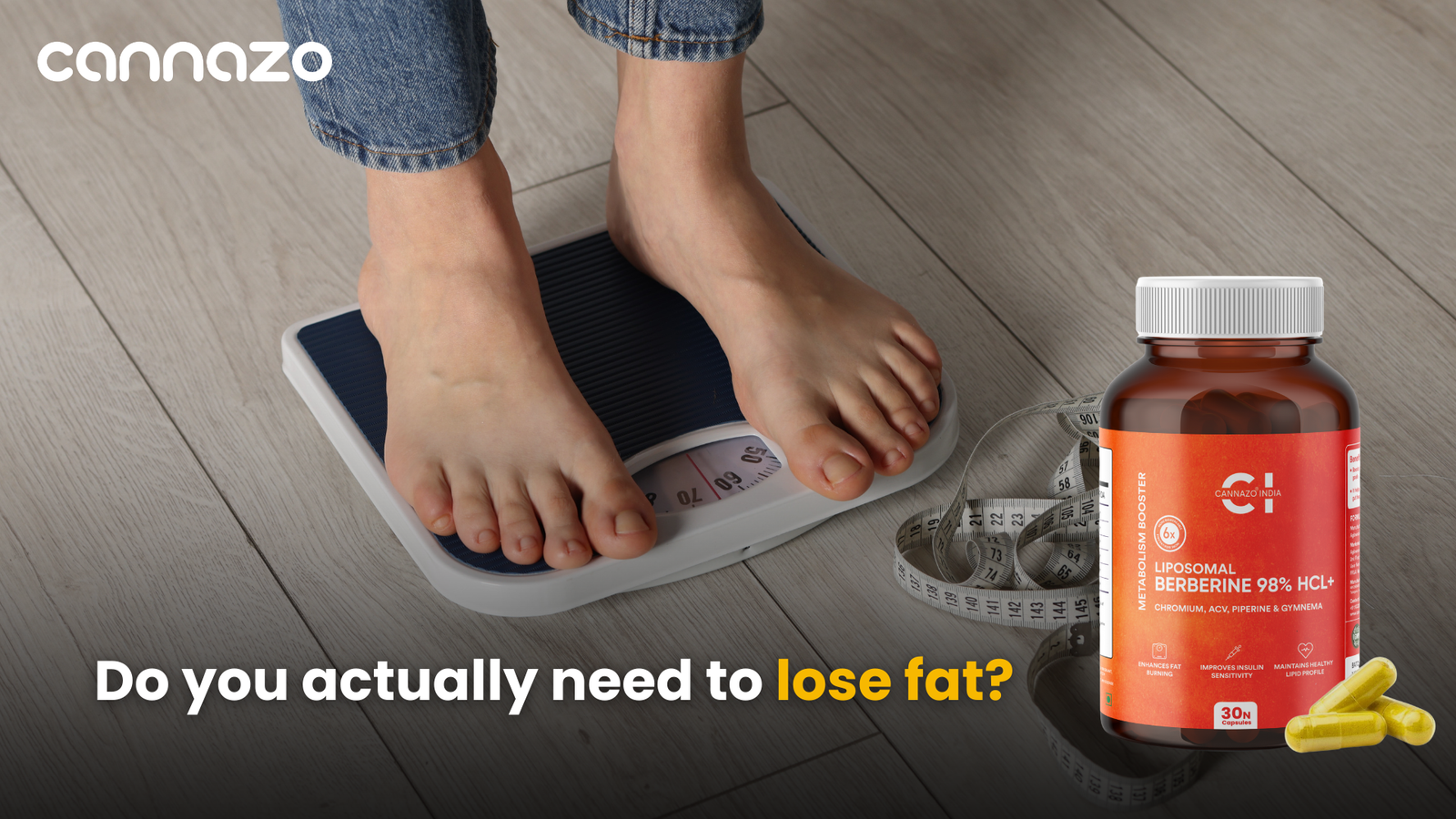
- Berberine: A plant compound that improves insulin sensitivity and supports healthy blood sugar. A meta-analysis in Phytomedicine (2021) found berberine supplementation significantly reduced waist circumference and fasting blood glucose in overweight adults. Liposomal berberine (like Liposomal Berberine from Cannazo India) offers superior absorption versus standard berberine.
- CBD (Cannabidiol): Preliminary research suggests CBD may help reduce cortisol-related stress eating and support sleep quality both of which affect fat loss indirectly. Consult a healthcare professional before use, particularly in India where regulations apply.
-
Omega-3 fatty acids: Reduce systemic inflammation, support muscle protein synthesis, and improve insulin sensitivity. Hemp seed oil and flaxseed are good plant-based sources.
These supplements are supportive tools. The fundamentals calorie deficit, protein, training, sleep always come first.
Risks of Carrying Excess Body Fat
| Condition | Increase in Risk |
| Type 2 diabetes | Up to 7× higher risk with obesity |
| Cardiovascular disease | 2–3× higher risk with excess visceral fat |
| Non-alcoholic fatty liver disease | Strongly correlated with visceral fat |
| Certain cancers (breast, colorectal) | 1.2–1.5× elevated risk |
| Sleep apnea | Strongly associated with neck and abdominal fat |
Benefits of Losing Body Weight
Research consistently shows that losing bodyweight produces meaningful health benefits:
- Blood pressure reduces by 5–10 mmHg
- Fasting blood sugar improves significantly
- HDL (good cholesterol) rises
- Joint pain decreases
- Sleep quality improves
- Energy and mood increase
You don't need to reach a "ideal" weight to see significant benefits. A 5 kg loss in someone weighing 80 kg is clinically meaningful.
Frequently Asked Questions
Q: What is fat loss and how does it work?
A: Fat loss is the process of reducing stored body fat (triglycerides in adipose tissue) through a sustained calorie deficit, increased physical activity, or both. When you burn more calories than you consume, your body mobilizes fat stores for energy, gradually reducing fat mass while ideally preserving muscle.
Q: What is the fastest way to lose fat safely?
A: The fastest safe rate of fat loss is approximately 0.5–1 kg per week, achieved through a 500–750 calorie daily deficit, high protein intake (1.6–2.2g per kg bodyweight), resistance training 3× per week, and 7–9 hours of sleep. Going faster typically causes muscle loss and metabolic slowdown.
Q: Does fat loss reduce belly fat specifically?
A: You cannot spot-reduce fat from one area. Fat loss is systemic — your body draws from all fat stores. However, a calorie deficit combined with resistance training and cardio consistently reduces both subcutaneous belly fat and the more dangerous visceral (abdominal) fat. People with higher visceral fat often see the fastest early results.
Q: What Indian foods are best for fat loss?
A: High-protein, high-fiber Indian foods support fat loss best: moong dal, rajma, chickpeas, paneer (in moderation), eggs, chicken, curd, ragi, jowar, and leafy greens like palak and methi. Reducing maida, white rice portions, added sugars, and deep-fried snacks while keeping total calories in a deficit is the most effective approach.
Q: Can stress cause fat gain even if I eat well?
A: Yes. Chronic stress elevates cortisol, which promotes fat storage — especially around the abdomen. It also increases appetite and cravings for calorie-dense foods. Managing stress through sleep, exercise, and mindfulness practices is a genuine fat loss strategy, not just general wellness advice.
Q: Is berberine effective for fat loss?
A: Berberine supports fat loss indirectly by improving insulin sensitivity, lowering fasting blood glucose, and reducing inflammatory markers. Multiple meta-analyses show it reduces waist circumference and body weight when combined with a controlled diet. It is not a fat burner but a metabolic support supplement.


Comments
The opinions expressed here are the views of the writer and do not necessarily reflect the views and opinions of Cannazo India.