










Table of Contents
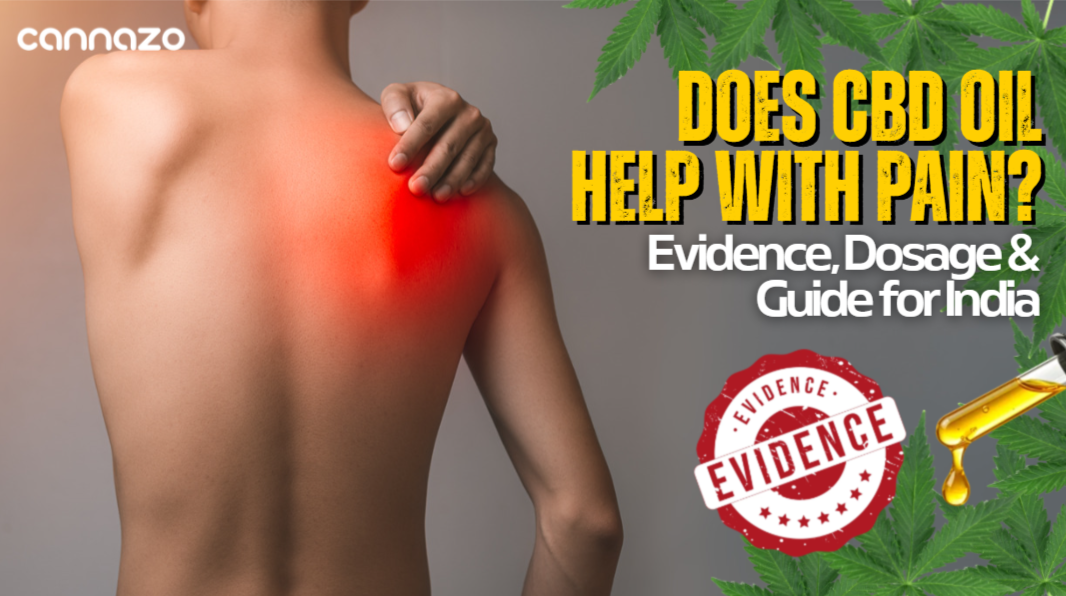
CBD oil has become one of the most discussed natural options for managing arthritis, chronic joint pain, and muscle discomfort. While early lab and animal studies suggested strong anti-inflammatory and pain-relieving effects, human clinical trials paint a more nuanced picture: CBD is generally well tolerated, but consistent, large pain reductions have been shown mainly with products that include THC or with topical formulations applied directly to painful joints.
Types of pain CBD may help
Research and user reports most commonly link CBD Oil for Pain Relief in:
- Nociceptive (joint/osteoarthritis) pain: Wear-and-tear pain in knees, hands, hips, and spine. Some small trials and topical studies show modest benefit, especially for localized joint pain.
- Inflammatory arthritis symptoms: Rheumatoid arthritis and related conditions. Evidence in humans is limited; most positive data come from THC+CBD sprays rather than CBD alone.
- Myofascial and muscle pain: Tight, tender muscle bands and post-exercise soreness. Results are mixed; some studies show improved function without clear pain reduction.
- Neuropathic (nerve) pain: Burning, shooting pain from nerve damage. The strongest cannabinoid signal here involves THC-containing products; CBD-only evidence is weak.
How CBD reduces pain & inflammation (CB1/CB2)
CBD interacts with the body’s endocannabinoid system, which helps regulate pain, inflammation, immune response, and mood.
- CB1 receptors are concentrated in the brain and central nervous system and influence how pain signals are perceived.
- CB2 receptors are found mainly on immune cells and peripheral tissues and modulate inflammation.
Unlike THC, CBD does not strongly bind to CB1/CB2. Instead, it appears to:
- Modulate receptor activity indirectly
- Reduce pro-inflammatory cytokines (e.g., IL-6, TNF-α) in preclinical models
- Influence non-cannabinoid pain pathways (e.g., TRPV1, serotonin receptors)
This multi-target action may explain why some people feel relief even when classic “cannabinoid” effects (like intoxication) are absent.
Oral drops vs topical roll-on/spray
How you use CBD oil matters as much as how much you use.
Oral drops/tinctures (sublingual or swallowed)
- Sublingual (held under the tongue 60–90 seconds): Bypasses some liver metabolism; bioavailability -12–35%. Onset -15–40 minutes; duration -4–6 hours.
- Swallowed capsules/oils: More first-pass liver metabolism; lower bioavailability; slower onset (1–2 hours) but longer duration.
- Best for: Widespread or systemic pain, sleep support, combining with other oral supplements/medications.
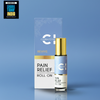
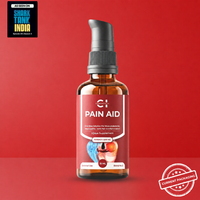
Topical roll-ons, gels, sprays
- Applied directly over painful joints or muscles.
- In small randomized trials, topical CBD significantly reduced localized arthritis pain and improved grip strength without systemic side effects.
- Best for: Localized joint pain (knees, hands, shoulders), post-workout muscle soreness, people avoiding systemic effects.
A practical rule: localized pain → start with topical; widespread or night-time pain → consider oral. Many users combine both.
Evidence for arthritis & chronic pain
Human evidence is mixed and depends heavily on formulation, dose, and whether THC is present.
Knee osteoarthritis:
- One moderate-quality RCT found high-dose oral CBD (around 150 mg/day) added to paracetamol reduced pain versus baseline, but other trials with lower doses or CBD-rich oils found no significant difference vs placebo.
- A 2025 knee OA trial using ~45 mg/day CBD-rich oil found it well tolerated but not superior to placebo for pain.
Topical CBD for arthritis:
Small trials in thumb/hand arthritis showed significant pain reduction and improved function with twice-daily topical CBD vs placebo.
Chronic pain overall:
- Major reviews (Cochrane 2025, AHRQ 2025) conclude that CBD-dominant products have not consistently outperformed placebo for chronic pain, while THC-containing products show small, short-term benefits with more side effects.
- Systematic reviews note average pain reductions often around 0.5–1 point on a 10-point scale, which may be below the threshold many patients consider “meaningful.”
Bottom line: Topical CBD shows more consistent localized benefit than oral CBD alone. For systemic chronic pain, evidence for CBD-only products remains limited.
CBD vs long-term painkillers (side effects)
When people consider CBD, they often compare it to long-term use of:
- NSAIDs (ibuprofen, diclofenac, naproxen)
- Acetaminophen/paracetamol
- Opioids (for severe pain)
- Adjuvant pain meds (gabapentin, duloxetine, etc.)
Potential advantages of CBD
- Lower risk of gastrointestinal bleeding/ulcers compared with chronic NSAIDs.
- No respiratory depression or high overdose lethality like opioids.
- Generally mild side-effect profile in trials: fatigue, dry mouth, mild GI upset, occasional liver enzyme elevations at high doses.
Important caveats
- Liver interactions: High-dose CBD can raise liver enzymes, especially with other hepatotoxic drugs.
- Drug interactions: CBD affects CYP450 enzymes and may interact with blood thinners, anti-seizure meds, some antidepressants, and more.
- Regulation/quality: Over-the-counter CBD products vary widely in actual CBD content and contaminants; third-party testing is essential.
CBD is not a proven replacement for prescribed painkillers, but for some, it may allow lower doses of NSAIDs or opioids under medical supervision.
Dosage guidance
There is no single “correct” CBD dose for pain; studies use a wide range, and individual response varies.
General starting approach (adults)
- Start low: 10–25 mg CBD per day.
- Titrate slowly: Increase by 5–10 mg every 3–7 days based on pain, sleep, and side effects.
- Target range: Many practical guides suggest 25–75 mg/day for chronic pain; some trials go higher (up to 150 mg/day), but side effects and cost rise too.
- Topical dosing: Apply a thin layer to the painful area 2–3 times daily; look for products listing mg CBD per mL or per application.
Tips
- Take oral CBD with food (especially fat) to improve absorption.
- Keep a pain/sleep diary for 4–6 weeks before judging effectiveness.
- If using other medications, consult a clinician about interactions and liver monitoring at higher doses.
Conclusion
CBD oil is a promising but imperfect tool for arthritis, chronic, and muscle pain. Current evidence suggests:
- Topical CBD offers the most consistent benefit for localized joint pain.
- Oral CBD alone shows mixed results; some people report meaningful relief, but high-quality trials often find no clear advantage over placebo unless THC is included.
- CBD appears safer than long-term NSAIDs or opioids in terms of serious adverse events, but it is not risk-free and can interact with other medications.
For anyone considering CBD, a cautious, measured approach, starting low, choosing quality-tested products, and coordinating with a healthcare provider, offers the best chance of benefit with minimal risk.
FAQ
-
How does CBD oil relieve pain?
CBD modulates the endocannabinoid system (CB1/CB2) and other pain pathways, reducing inflammatory signaling and altering pain perception without causing intoxication.
-
Is CBD good for arthritis and joint pain?
Evidence is mixed. Topical CBD shows significant benefits in small trials for localized arthritis pain. Oral CBD-only products have inconsistent results, with some trials showing no difference vs placebo.
-
Should I use CBD drops or a topical roll-on for pain?
Localized joint/muscle pain: Start with a topical roll-on/gel.
Widespread or night-time pain, sleep issues: Consider oral drops/tincture, possibly alongside topical.
- How long does CBD take to work for pain?
- Topical: Some feel relief within 30–60 minutes, with repeated applications over days to weeks.
-
Sublingual/oral: Onset ~15–90 minutes, but meaningful changes in chronic pain may take 2–6 weeks of consistent use.
-
Is CBD safer than regular painkillers?
CBD generally has a lower risk of severe side effects than chronic NSAIDs or opioids, but it can still cause fatigue, GI upset, liver enzyme changes, and drug interactions. It should not replace prescribed painkillers without medical guidance.
References
- Effects and safety of a CBD-rich Cannabis sativa oil in knee osteoarthritis. Frontiers in Pharmacology, 2025. https://www.frontiersin.org/journals/pharmacology/articles/10.3389/fphar.2025.1657065/full
- Oral Cannabidiol in the Treatment of Myofascial Pain Disorder of the Temporomandibular Region. PMC, 2026. https://pmc.ncbi.nlm.nih.gov/articles/PMC13095194/
- Cannabinoid efficacy for pain: dose, chronicity and route. Frontiers in Neuroscience, 2026. https://www.frontiersin.org/journals/neuroscience/articles/10.3389/fnins.2026.1888863/full
- Effects and safety of a CBD-rich Cannabis sativa oil in knee osteoarthritis (clinical trial summary). PubMed, 2025. https://pubmed.ncbi.nlm.nih.gov/41487518/
- What Is the Best CBD for Pain and Inflammation? Science Insights, 2026. https://scienceinsights.org/what-is-the-best-cbd-for-pain-and-inflammation/
- CBD for Chronic Pain: Does It Actually Work? (2026 Review). Reclaim Labs, 2026. https://www.reclaimlabs.com/learn/cbd-chronic-pain/
- CBD for chronic pain: what the science says (2026). Cannactiva, 2026. https://cannactiva.com/en/cbd-for-chronic-pain
- What cannabis really does for chronic pain. ScienceDaily, 2026. https://www.sciencedaily.com/releases/2025/12/251224015651.htm
- CBD for Pain Management: A Comprehensive Evidence-Based Guide. Wellness with CBD, 2026. https://wellnesswithcbd.com/cbd-for-pain-management-a-comprehensive-evidence-based-guide/
- Cannabinoids and Chronic Pain: 2025 Evidence Review. CED Clinic, 2026. https://cedclinic.com/cannabinoids-chronic-pain-clinical-outcomes-2025/
- FAQs: Cannabis For Chronic Pain (2024 systematic review summary). MMJ, 2026. https://www.mmj.com/research/cbd-chronic-pain-systematic-review-2024/
- Cannabidiol (CBD) in Rheumatic Diseases (Musculoskeletal Pain). Scribd/document review, 2026. https://www.scribd.com/document/907735627/Cannabidiol-CBD-in-Rheumatic-Diseases-Musculoskeletal-Pain
- Cannabinoids Orthopaedic Pain Systematic Review 2025. CED Clinic, 2026. https://cedclinic.com/cannabinoids-orthopaedic-pain-systematic-review-2025/
- Best CBD for Arthritis | Top 3 Choices in 2026. Innerbody Research, 2026. https://www.innerbody.com/best-cbd-for-arthritis


Comments
The opinions expressed here are the views of the writer and do not necessarily reflect the views and opinions of Cannazo India.